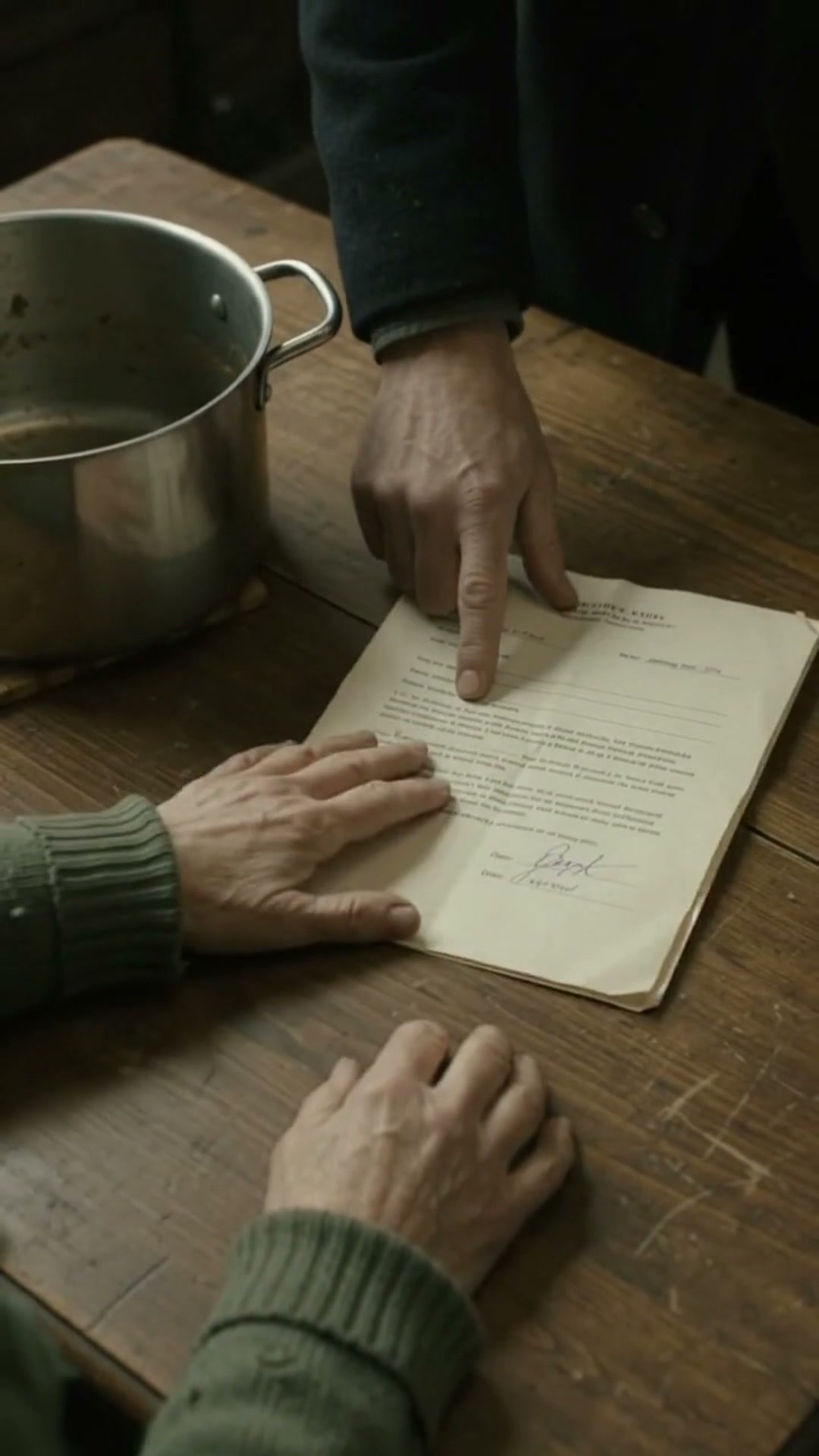
remove my choices.
At the guardianship hearing the following week, the courtroom was smaller than our dining room and far less comfortable.
Sadie sat beside Evan, her hands clasped under the table.
Their lawyer said the petition arose from sincere concern about my safety.
Leila answered with the timeline, the class video, my financial records, the history of the alleged nighttime wandering, and the evidence that the property transaction was being challenged as unauthorized.
The judge didn’t decide every question that morning.
The immediate issue was whether there was a basis to give my daughter emergency control over me.
After reviewing the evidence and hearing my answers, the court denied the emergency request and set the remaining matters for further proceedings.
Later, Sadie withdrew her petition rather than pursue it.
When the judge asked whether I understood the purpose of the hearing, I said, “Yes.
My daughter wants the court to make decisions for me because I refused to make the decision she wanted.”
I didn’t say it angrily.
That was the part that seemed to hurt Sadie most.
Outside the courthouse, she tried to speak with me while Evan took a call by the steps.
“I thought we’d lose everything,” she said.
“You might have lost your business,” I answered.
“You decided that meant you could risk my home.”
She said Evan had assured her the paperwork was temporary, that she’d only be borrowing the equity, that there would be no harm if the business paid back the loan.
I believed she was frightened.
I also knew she had signed as my attorney-in-fact and filed a petition portraying me as incapable.
Fear explained her choices.
It didn’t undo them.
“Did you ever think what would happen if you couldn’t pay?” I asked.
“Would I have lost the house? Would you have told Nora it was because Grandma was confused?”
Sadie began to cry.
I wanted to put my arms around her.
Instead, I told her she needed a lawyer of her own and should stop discussing the case with me.
It was the first time I had offered her a boundary instead of a rescue.
The legal process took months.
The lender permanently declined the loan, having never released the $275,000.
The developer confirmed that no easement had been executed.
A civil challenge to the deed proceeded, while investigators examined the suspected forged documents.
Evan’s lawyer eventually agreed not to defend the transfer, and the court entered an order declaring the purported conveyance void.
A certified copy of the order was recorded to correct the public title history.
The investigation into how the signatures and notarial information had been used continued beyond the property case.
I didn’t need an arrest on Thanksgiving afternoon or a spectacular courtroom confession to know what had happened.
I needed my name, my land, and my ability to decide what happened next.
There was still the question of Sadie and Evan living upstairs.
Leila helped me give written notice and resolve their occupancy without locking anyone out.
They moved into a rental after the agreed period ended.
Not long afterward, Sadie told me she and Evan were separating.
She didn’t ask me to fix that either.
Nora was sixteen by then.
One Sunday she called and asked whether I hated her mother.
I told