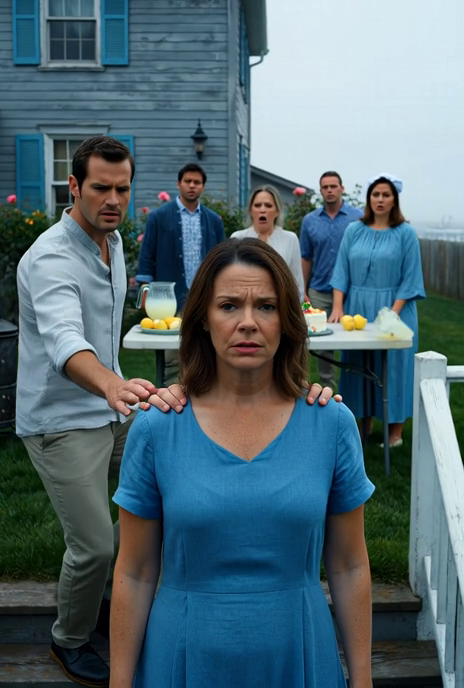
“I love you, too,” I told her.
“But I will not prove that love by giving up control of my life.”
Vanessa accused me of humiliating them.
Ethan insisted that I was overreacting.
I reminded them that no one had forced them to make those statements, and no one was stopping them from explaining their actions truthfully.
Then I asked them to leave.
The weeks that followed were difficult.
Margaret and other appropriate professionals examined the documents and the recording.
We preserved the evidence, reviewed the proposed transactions, and took lawful steps to protect my property and finances.
Any possible legal violations were evaluated through the proper channels rather than through threats or public accusations.
I also made changes that had nothing to do with punishing my children.
I updated my estate plan after independent review.
I clarified my wishes regarding future care.
I arranged for trusted professionals to help manage important matters if I ever needed assistance, while ensuring that any authority granted would be appropriate, documented, and subject to safeguards.
I stopped automatically paying my children’s expenses.
I had once believed that saying yes was the easiest way to keep our family connected.
Now I understood that financial support should never be confused with a guarantee of affection.
Ethan did not contact me for several weeks.
Marissa sent long messages alternating between apologies and accusations.
Sometimes I read them immediately.
Sometimes I waited until the following morning.
I refused to make decisions while guilt or anger was doing the thinking for me.
Eventually, Ethan asked to meet me alone.
We sat across from each other at a quiet café.
He looked tired, and for the first time in years, he seemed unsure of what to say.
“I thought we were helping you,” he began.
I looked at him for a long moment.
“Helping me would have meant asking what I needed.”
He admitted that he had convinced himself the property and financial arrangements would simplify everything.
He also acknowledged that he had allowed resentment and entitlement to influence his decisions.
He did not offer a complete explanation for every statement on the recording, and I did not pretend that one conversation had repaired the damage.
I told him that rebuilding trust would require time, honesty, and consistent behavior.
It would not require me to surrender my independence.
Marissa eventually apologized as well.
Whether those apologies would lead to lasting change remained something only time could answer.
I loved both children, but I stopped treating reconciliation as an obligation that required me to ignore my own safety.
Months later, I stood alone on the porch of my lake house.
The water caught the last light of the afternoon, and the breeze moved gently through the trees.
Inside, my wife’s photograph rested on the mantel beside a small vase of white roses.
I remembered the wedding speech and the dance with my daughter.
Those memories still hurt, but they no longer defined me.
I had spent years believing that being a good father meant protecting my children from every consequence and giving them whatever they needed.
I had confused sacrifice with responsibility and silence with peace.
I finally understood that love without boundaries can become an invitation for others to take more than they should.
I still hoped my family