following morning.
I’m downstairs.
The documents are ready.
Call when you need me.
He’d planned to visit after the doctors finished their rounds.
I hadn’t told Graham Samuel was there.
I hadn’t told him about the documents either.
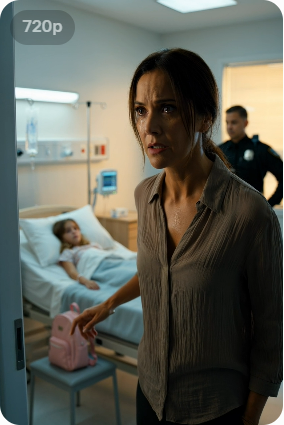
Now, sitting opposite my husband in the hospital consultation room, I heard heavy footsteps approaching.
The door opened.
Samuel entered with Evelyn Park, an attorney who had been examining the suspicious transactions.
Graham stood abruptly.
“Colonel Reed?”
Samuel looked at me first.
“Nora, are you all right?”
“I’m exhausted,” I said.
“But I’m here.”
He nodded, then turned toward Graham.
“I understand you’ve been making decisions about assets that don’t belong to you.”
Graham laughed nervously.
“This is between my wife and me.”
“The marriage is,” Evelyn replied.
“The company isn’t.”
She placed the authenticated shareholder records on the table.
“Windward Trust owns fifty-seven percent of Lantern Biomedical’s voting shares.
Colonel Reed exercises those votes as trustee.”
Graham frowned.
“Yes.
I know the capitalization structure.”
“Then you also know that those shares cannot be transferred by an ordinary marital settlement signed by your wife.”
Graham looked at me.
“What does she have to do with Windward?”
Samuel answered.
“Everything.
Windward Trust was established by her father.
Nora is its sole beneficiary.”
For the first time since entering the hospital, Graham had nothing to say.
He stared at me, then at Samuel, then back at the folder clutched against his chest.
“You never told me.”
“You never asked,” I replied.
His face hardened.
“You deliberately hid money from your husband.”
Samuel’s expression didn’t change.
“She disclosed the trust’s existence and the company’s ownership during the appropriate corporate processes.
Your failure to investigate its beneficial ownership does not make the assets yours.”
Evelyn pointed toward the attached corporate authorization.
“And this document purports to assign rights your wife cannot personally transfer.”
Graham shifted in his chair.
“Then it’s irrelevant.
Let’s move on.”
“We can’t,” Evelyn said.
She removed another document.
“Because we also have an electronic approval recorded at 2:14 yesterday morning.”
She placed it before him.
“It appears to authorize a $1.1 million payment to Crosspoint Insights and a licensing arrangement involving Lantern’s principal monitoring technology.”
The approval carried my name.
I felt the coldness of the room settle around me.
“I didn’t sign that.”
“We know,” Evelyn replied.
“At that time, you were under anesthesia for emergency surgery.
We’ve asked the hospital to preserve the relevant records, with your authorization.”
Graham’s mouth opened.
Nothing came out.
Then Lydia moved.
CHAPTER FOUR — THE SECOND PHONE
Lydia had been standing near the door, quietly watching Graham’s confidence dissolve.
Now she reached inside the pocket of my blue cashmere coat and removed a black phone.
I recognized it as one of the company devices Graham had recently insisted was missing.
His reaction was immediate.
“Give me that.”
He stepped toward her.
Samuel moved between them.
“Don’t touch her.”
Graham stopped.
Lydia backed toward the wall.
“You told me everything was authorized,” she whispered.
“Lydia, be quiet.”
“You told me Nora had agreed to transfer the rights.”
His eyes darted toward Evelyn.
“She’s confused.
She’s been under a lot of stress.”
Lydia shook her head.
“No.
You told me to keep the second phone because you didn’t want anyone reviewing your personal messages.”
Samuel held