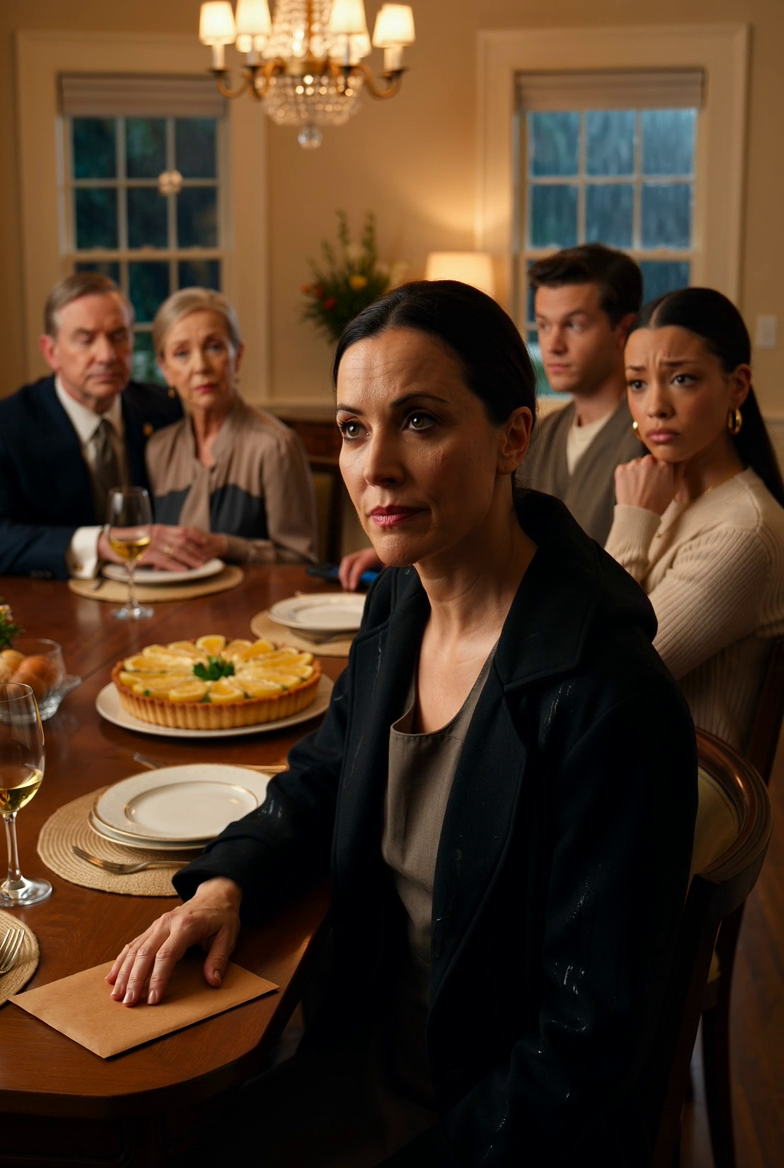
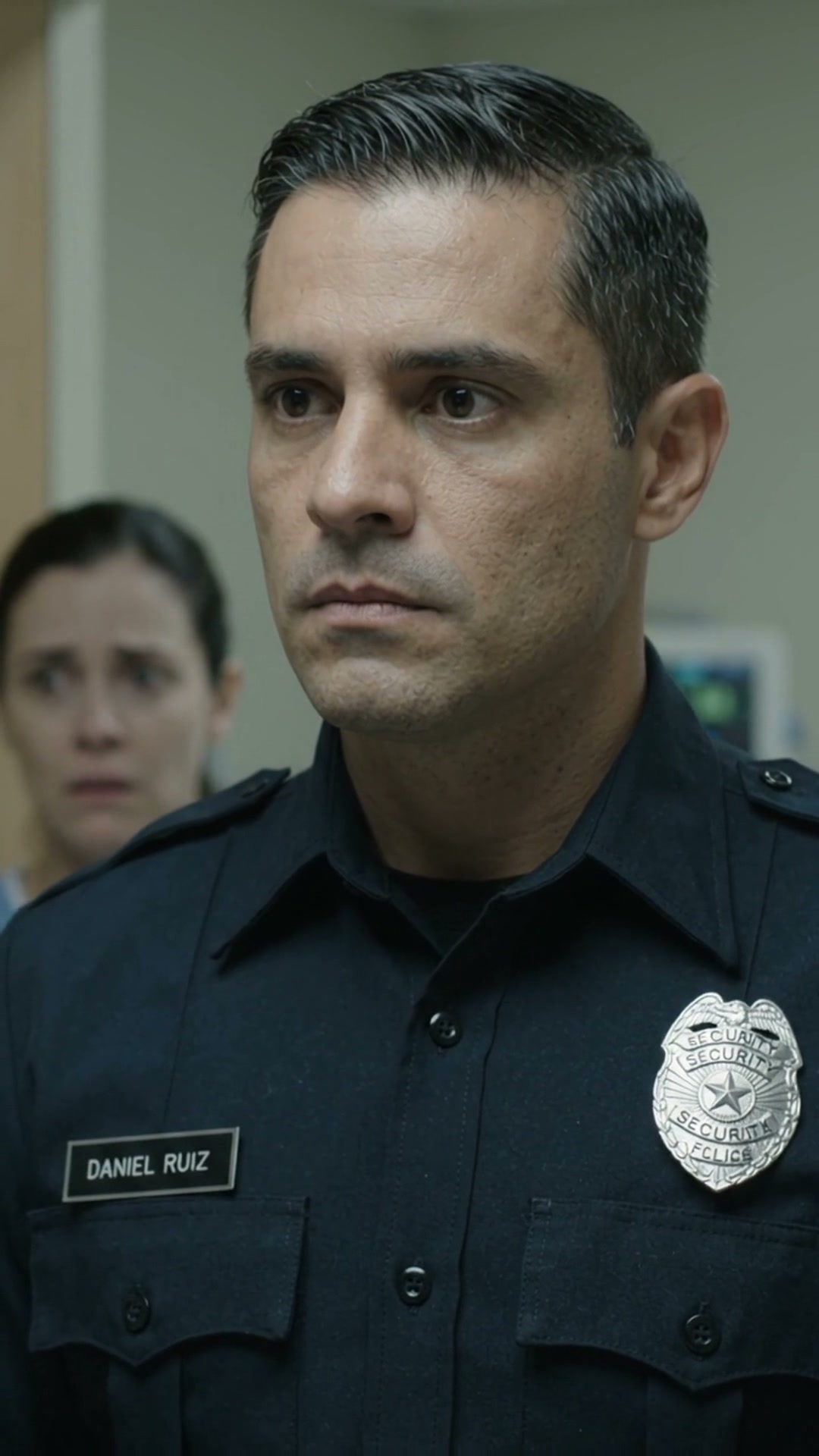
only because Dad acted before the lender completed foreclosure steps and because enough assets could be recovered to negotiate a restructuring.
The process took months.
It cost money.
It cost pride.
And it cost Baylor his position at the company.
The criminal and civil questions surrounding the disputed signature were left to attorneys and investigators rather than turned into some dramatic backyard arrest.
Real consequences were slower than that.
Paperwork.
Interviews.
Preservation notices.
Account reviews.
A thousand small facts placed beside one another until denial had nowhere left to stand.
My relationship with Dad was harder.
Three weeks after Father’s Day, he called me.
“Can you come home?”
I nearly said no.
Instead, I drove to Briar Glen the following Saturday.
The backyard looked smaller without relatives filling it.
Dad sat beneath the maple tree alone.
The wrapped wristwatch I had brought on Father’s Day was sitting on the table beside him.
Still unopened.
I sat across from him.
For several minutes, neither of us spoke.
Then he said, “I was cruel to you.”
I looked at him carefully.
He did not say Baylor made him cruel.
He did not say he had been stressed.
He did not say I was too sensitive.
He simply repeated, “I was cruel to you.
For years.”
That mattered.
But it did not erase anything.
“Why?” I asked.
He rubbed both hands over his face.
“Because you left.”
“You punished me for leaving home?”
“You were always the one who questioned me.
Baylor wanted my approval.
Veda wanted everyone happy.
You looked at me like I could be wrong.”
I almost smiled.
“You can be wrong.”
He nodded.
“I know that now.”
The silence stretched between us.
Then he looked toward the garage.
“When you moved to Columbus, I told myself you thought you were better than us.
Truth was, I think I knew you were brave enough to build something I didn’t understand.
So I made it small.”
That was the closest my father had ever come to explaining himself honestly.
I still did not forgive him that afternoon.
Forgiveness is not a switch.
I told him exactly that.
“You humiliated me for years, Dad.
You compared me to Baylor.
You mocked my work.
You called me a disgrace in front of the whole family.
Finding out you were wrong about him does not suddenly make you right about me.”
His eyes lowered.
“I know.”
“And I won’t keep coming home if the price of being your daughter is letting you insult me.”
He nodded again.
Then he pushed the gift toward me.
“I didn’t open it.”
“Why not?”
“Didn’t feel like I deserved it.”
I looked at the package for a long moment.
Then I pushed it back.
“Open it.”
He peeled away the paper slowly.
When he saw the watch, his face changed.
His thumb moved across the brown leather strap.
“My old one stopped.”
“I remembered.”
He looked at me.
And there it was.
The sentence I had wanted before everything went wrong.
Only now it came too late to carry the same meaning.
“You remembered,” he whispered.
I stood.
“Yes.
I usually do.”
The following months changed the Lowrie family more than any dramatic confrontation could have.
Veda stopped asking me to ignore Dad’s comments for the sake of